
You can Join our Telegram documentary channel here
A total lockdown in lay man language refers to total restriction of movement. It means people not being allowed to leave their homes, unless a variation order is issued that will allow people to leave their homes only to get essentials and in this case, food and medical are.
However, a total lockdown in Kenya is suicide. Why? I’ll give the reasons shortly.
COVID-19 continues to paralyse the most powerful economies in the world. Bringing down a global
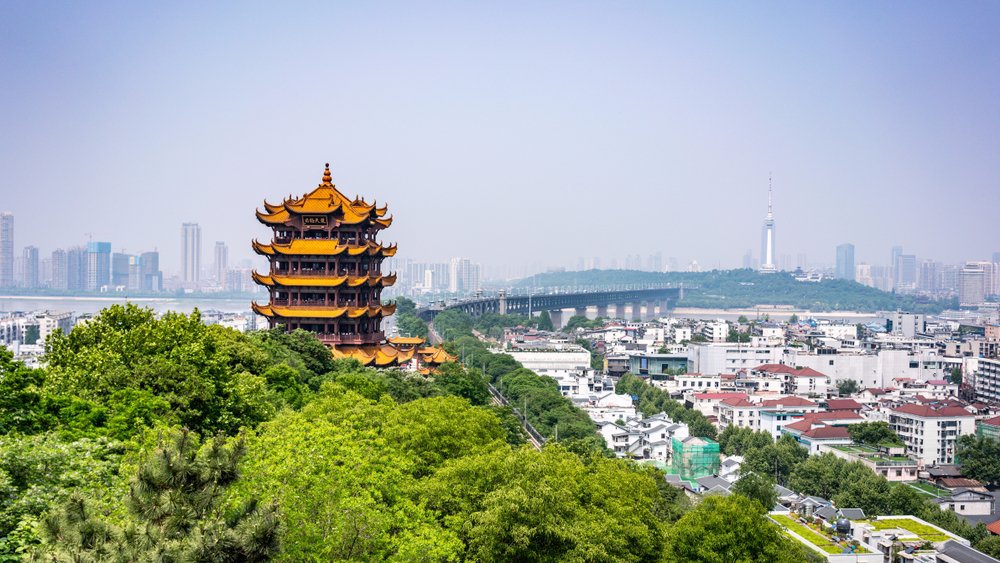
supply chain to its knees. I first heard of corona virus in late January when a friend of mine gave me a video call on WeChat (an equivalent of Facebook) to explain to me what was going on in china. He seemed much stressed and very nervous. At first I could not understand what point he was trying to make. A few hours later we were able to connect via WhatsApp of course using VPN, reason? China does not allow WhatsApp. I remember his vivid description of a chilling situation of what was unfolding in China, they had been put on a lockdown. Job(not his real name), is a mechatronic engineering student in the province of Hubei, the birth place of the deadly corona virus. Mark in, at that point even the main stream media in Kenya had not picked up the story yet, probably they had not even heard about it. They didn’t even know what it was, maybe.
I became very curious and decided to investigate what was going on, it didn’t take me long to find out
what was happening. Executive orders were being issued by different governments across Europe and
the continent of America. These executive orders banned flights into china, this caught my attention
because it was an unusual decision being undertaken. In the past, flights have only been restricted in warzones, I mean dangerous warzones.
Governments started declaring state of emergency and ordered lockdowns. I watched in shock as giant companies shut down their production, manufacturing and assembly plants in Asia. Kia Motors, BMW, Toyota, Apple, Samsung Electronics among many others were affected. Britain invoked world war two laws while France and Italy invoked emergency laws. As a result, these countries despite having incurred huge costs and paid dearly, the lockdown they invoked has finally become a success or arebeginning to bear fruit.

Kenyans have become unease over the rate at which the virus is spreading. As a result, there has been
pressure mounting on the government and categorically, President Kenyatta to declare a state of
emergency and consequently a lockdown. As it is, Public order no.1 of 2020 imposed a dusk to dawn state curfew, a step that Kenyans thought it was very lenient in terms of taming the spread of the deadly
virus. In public order no.2 of 2020, The National Security Council initiated partial lockdown (secession
order, where movement into and out of some regions was restricted), a move Kenyans criticised saying
it ought to have been a total lockdown across the territory of the republic of Kenya. The orders have
since been extended for another 21 days.

Below are some of the reasons why the Commander-In-Chief has avoided a total lockdown.
1) Pressure of the high debt burden

At the start of his presidency, Uhuru Kenyatta found the Kenyan economy comfortably managing a
1.2 Trillion shilling debt (foreign and local). The government was spending up to 800 billion as its
annual budget for development and recurrent expenditure. The country now has a 3.2 trillion
budget and a 750 billion deficit spending. The debt burden has climbed to 5.1 trillion and an ever
rising debt ceiling, currently holding at 7 trillion. It means the government still has room to borrow
an additional 2 trillion. Well, the issue is the 5.1 trillion loan. Approximately 97% of that amount is foreign and at this trying time, the foreign governments and banks financing the loans are in dire
need of this money to get them through. For this reason, the financiers have declined to cancel or
postpone these loans therefore, Kenya has no choice other than to pay. A lockdown will therefore
bring the economy to a standstill, making it hard for the government to get the money to pay the
loan.
2) Corruption

Kenya has received billions of shillings in terms of aid, from foreign donors as well as well-wishers
from within the republic. The authority on this money is to be spend was given to a committee, The
COVID-19 committee. In as much as this is a stupendous presidential approach to managing the
finances, it paints a picture of mistrust the Uhuru has with the finance mechanism of the ministry of
health (which in this case should have been in charge of managing the money as it is the ministry
taking control of the crisis). It is a message to the public, on how the ministry has been invaded by
cartels.
3) poverty
Kenya is a poor third world country, stirred in scandal after scandal of corruption. Hundreds of
billions are stolen every year from taxpayers’ kitty, 99% of which is not recovered. As a result the
country has continued to be poor since money meant for development goes into the pockets of a
few individuals. For that reason, there are no facilities to handle the emergencies that come with a
lockdown. We don’t have enough ambulances to ferry individuals to the medical centers from their
homes during such a time.
4) Unemployment

A majority of Kenyans are unemployed despite many of them being graduates. Lockdown will make some industries to shut down completely and thus some people will be rendered jobless. Kenyans won’t be able to cater for their needs. The unemployment rate in Kenya is 49.3% as of 2019 up from 45.6% in 2010. The population
growth has however gone down from 2.8% per annum to 2.6% per annum. This means that a large
size of the population survives on a hand to mouth basis. There are also those Kenyans without a job
in the first place. They do not have a stable savings income and for that reason, they won’t have
money to sustain them during a lockdown. People will instead start dying of hunger as opposed to
the virus.
5) System inefficiency
There’s no doubt the system is very inefficient. Recently the cabinet secretary for health issued a
gazette notice, ordering everyone to wear masks in public places. How is this order being effected in
your area?
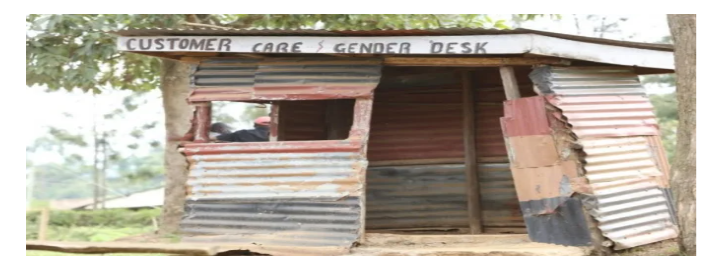

The police and health officers lack the technology and the equipment to enforce a lockdown. The
president has bragged about this country attaining the police to civilian ratio of 1:450 and even
surpassing it. Unfortunately, what he does not say is that the National police service is ill equipped
to deal with emerging challenges. There is a major logistic challenge in the service and mark in, the
police don’t have protective gear to enforce this order.
6) Economic Panic
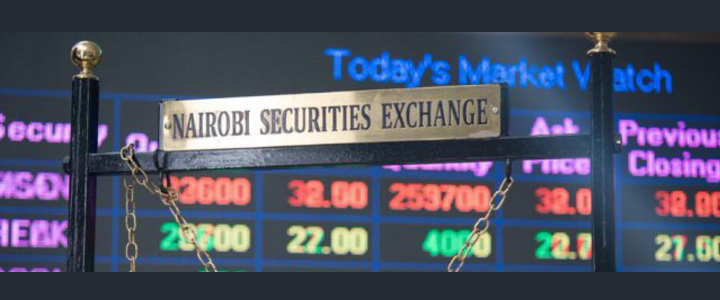
Twice, the NSE (Nairobi Securities Exchange) was closed for trading below 2,000 points. In just 15
minutes the stock exchange the market was closed, the economy lost close to 600 billion shillings!
Therefore, to avert such kind of a panic that will make investors withdraw their investments, the
president has opted to use other methods to avoid a lockdown.
Further to that, a lockdown will mean some essential sectors of the economy are closed down
7) Low literacy levels
In as much as we’ve made some baby steps as a country in some areas, we must face the fact that
some parts in this country don’t have access to quality education, thanks to corruption. For many
reasons, one way or another, some people have not gone to school. Others who have gone to
school might have dropped out at very early stages and thus the impact the system had on them
was very minimal. You cannot force someone who has not gone to school to stay indoors for 21days.
How will they understand the importance of the lockdown? They will be rebellious fight your
directive or order in this case.
In some developed countries, law enforcement agencies don’t have to enforce the lockdowns. They
only exist to facilitate smooth running of activities and help health professionals distribute medical
equipment. This is attributed to high literacy levels.
In conclusion, all these factors combined make it very had for this country to effect a lockdown. It’s a suicidal move. The economy will collapse, completely. As much as the government insists the option is on the table, then am sure it is the very last option. It will only be implemented when everything is sinking. The government cannot tell Kenyans that this economy cannot handle a lockdown because of a weak economy… But at least I’ve explained some concepts to you.
 The Explainer
Leave a comment